How to Export Albanian Products to the EU: The 2025 Guide
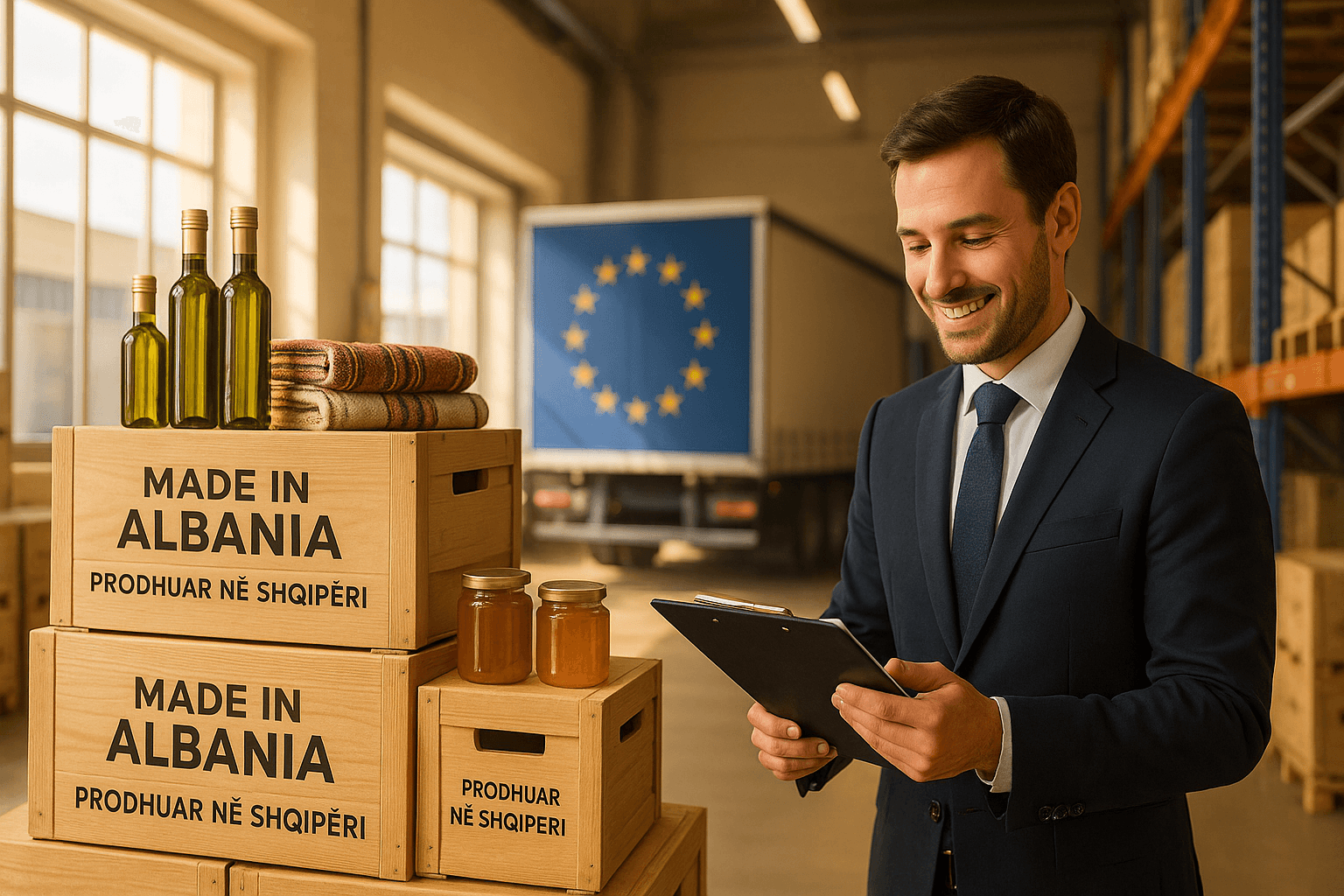
How to Export Albanian Products to the EU: The 2025 Guide
Exporting Albanian products to the European Union (EU) market can be a major step for Albanian businesses. Here is what you need to know to get off to a successful start:
Benefits of the Stabilization and Association Agreement (SAA): Most Albanian agricultural products are exported free of customs duties, with a few exceptions (e.g., beef, sugar and wine).
EU rules: European standards must be met, including the CE marking and the regulations on carbon, deforestation and ecodesign.
Required documentation: Prepare the export declaration, the commercial invoice and the certificate of origin to avoid customs delays.
Transport: Choose between road, sea or air transport, depending on the product and the urgency.
Financing and support: Make use of EU funds and the services of institutions such as AIDA and Albanian Customs.
First step: Make sure your products meet EU standards and prepare the necessary documents. Exporting to the EU takes commitment, but with the right information, you can succeed.
National agriculture scheme approved / Denaj: Support for farmers and the fuel oil scheme
EU Trade Rules and Export Requirements
Exporting Albanian products to the European Union market requires full compliance with EU trade rules. These rules are the same for all member states, since trade policy is an exclusive competence of the European Union[8].
Compliance Rules for Exporting to the EU
To export to the EU, it is essential to be familiar with three main regulations:
Carbon Border Adjustment Mechanism (CBAM): This mechanism aims to protect the market from competition from countries with lower environmental standards. Businesses must analyze their supply chains and ensure accurate data collection systems[6].
EU Deforestation Regulation (EUDR): Requires products to be deforestation-free, including due diligence systems to guarantee compliance[6].
Ecodesign for Sustainable Products Regulation (ESPR): Products must meet ecodesign standards and be equipped with a Digital Product Passport, which helps make the supply chain transparent[6].
In addition, the correct use of the EU Combined Nomenclature (CN) for customs tariffs is essential to avoid errors in customs declarations and ensure a smooth process[6].
Required Licenses and Certifications
Some products require specific licenses and certifications for export to the EU. For example, pharmaceuticals, food and chemicals often require special documentation[1]. Albanian products must be tested and certified by independent accredited bodies[9]. SGS Albania offers certification services to help businesses meet regulatory requirements in international markets[9].
Institutions such as the Albanian Investment Development Agency (AIDA) and Albanian Customs provide valuable guidance on product compliance[1]. Using the correct Harmonized System (HS) codes is also key to avoiding customs delays or additional duties[1].
The export of dual-use items, regulated by Regulation (EU) 2021/821, is another important aspect. In 2022, authorized trade in these items reached over EUR 57.3 billion, representing 2% of total exports from outside the EU[7]. Businesses must be informed about this regulation and put safeguards in place to ensure compliance[7].
Protecting Intellectual Property in the EU
Besides technical compliance, protecting intellectual property is essential to maintaining the competitive advantage of Albanian products on the European market[12]. In the EU, intellectual property rights must be registered and enforced under local laws[10].
"It is vital that companies understand that intellectual property rights are primarily private rights and that the United States government cannot enforce them for private individuals in the European Union." - U.S. Commercial Service[10]
Copyright is protected automatically upon creation in most European countries, but registration provides additional proof of ownership[11]. For trademarks and designs, the first-to-file registration system is the main standard[10].
In June 2023, the Unitary Patent system and the Unified Patent Court were established, making it possible to obtain and enforce a single patent with uniform protection in several EU member states[10].
Albanian businesses should draw up a clear intellectual property strategy, ensuring full protection for patents, trademarks, copyright and designs. In addition, a thorough intellectual property audit can help identify weaknesses and build strong contracts that include non-compete clauses and confidentiality provisions[10].
Knowing and applying these rules is essential to export success on the European market.
Meeting EU Product Standards
To comply with the trade rules of the European Union, Albanian products must meet the quality standards set by the EU. These standards include compliance with EU directives, and failure to comply may result in fines or the banning of products from the market[13].
CE Marking Requirements
The CE marking is a mandatory requirement for products covered by EU directives[19]. It indicates that the product meets European standards for health, safety and environmental protection[18]. With the CE marking, companies can sell their products in all 30 countries of the European Economic Area[20].
The process of obtaining the CE marking involves several main steps:
Identifying the directives applicable to the product.
Testing and conformity assessment: In some cases, manufacturers can carry out this process themselves, while in others a notified body must be involved[17].
Preparing the technical file: This file contains documents that demonstrate compliance with the relevant requirements[15].
Drawing up the EU Declaration of Conformity: This declaration is signed by the manufacturer and kept together with the technical file[13].
Affixing the CE marking: This is done in accordance with the requirements of the relevant directive[17].
The cost of obtaining the CE marking varies depending on the complexity of the product. If the manufacturer carries out the assessment itself, there are no additional fees. However, where an independent assessment by a notified body is required, a fee must be paid for the service[17].
The EU Blue Guide and Product Standards
The Blue Guide is an important document that provides guidance on EU product rules and covers a wide range of products governed by harmonized EU legislation[14]. In July 2022, the European Commission updated this guide to reflect changes in legislation, including issues such as product repair, software, online sales and Brexit[16]. For Albanian manufacturers, this document is an indispensable resource for understanding the specific requirements for their products. After studying the guide, the next step is product testing and certification.
Product Testing and Certification
Manufacturers are responsible for ensuring that their products comply with EU rules before placing them on the market. The assessment process includes a detailed risk analysis and adherence to harmonized standards. Where necessary, the Nando database can be used to find a notified body; in addition, CE marking compliance can be supported by organizations such as UL Solutions[17][21].
Technical documentation is an essential part of the process and must contain all the information demonstrating the product's compliance with the relevant specifications. This documentation must be kept in such a way that it is available to the supervisory authorities in the event of an inspection[15].
Export Documentation Requirements
Proper preparation of documentation is a key step in avoiding delays during the export process. For Albanian companies targeting European markets, meeting customs requirements is a must.
Documents Required for Export
To export goods from Albania to EU countries, businesses must complete a number of essential documents. One of the most important is the electronic export declaration, which must be submitted to the national customs authorities. This declaration contains detailed information such as the origin of the goods, the destination, the goods codes, the customs procedures and the total value of the goods[3].
Another important document is the commercial invoice, which includes the product description, quantity, price and payment terms. This document serves as the basis for calculating taxes and customs duties[1].
The certificate of origin is also essential, as it proves the country of production of the goods. This certificate is particularly important for benefiting from preferential trade agreements, such as the Stabilization and Association Agreement between Albania and the EU. The EU accounts for 62% of the Western Balkans' total trade, making it the region's main partner[22].
Other necessary documents include the packing list, which details the contents of each package, as well as import licenses or permits that may be required by the destination country[1]. In some cases, additional documents may be needed, depending on the type of product.
To ensure that the documents are accurate, it is advisable to work with a licensed customs broker[1]. Meanwhile, companies with export experience can benefit from simplified customs procedures[3]. After preparing the documents, it is just as important to follow the rules on VAT and taxes.
VAT and Tax Requirements
From a fiscal standpoint, exports from Albania to the EU benefit from a zero VAT rate[24]. This means that businesses do not have to charge VAT on the goods or services they export. However, it is essential to keep complete documentation to justify this exemption.
The standard VAT rate in Albania is 20%[23], while in the EU it averages 21%[24]. Every Albanian business with an annual turnover above 10 million lekë must register for VAT[23].
For documentation purposes, businesses must keep sufficient proof of export, such as invoices, delivery records, bank statements and customs documents, for a period of at least 10 years[24]. These documents are essential to prove that the goods have been exported and to enable the application of the zero VAT rate.
VAT returns must be submitted electronically by the 14th of each following month, while the sales and purchase ledgers must be submitted by the 10th of the following month[23]. For services, it is important to distinguish B2B (business-to-business) transactions from B2C (business-to-consumer) ones, in order to determine the place of supply and apply VAT correctly[24].
Trade between the EU and the Western Balkans reached EUR 83.6 billion in 2024, an increase of 28.6% since 2021[22]. These figures show the importance of trade relations and the need for a clear understanding of export documentation requirements in order to benefit from these opportunities.
Transport and Distribution Options
Once you have met the export requirements, the next step is organizing logistics. Choosing the most suitable mode of transport and distribution is a key element in ensuring that your products reach European customers safely and efficiently.
Choosing Transport Methods
Road transport is one of the most widely used options for exports to the EU. It offers a good balance between cost and speed, allowing transit within 1–2 days, with advance notice of 1–2 days[25][27][28].
Another alternative is groupage transport, which consolidates small loads to form a full load, reducing costs. As KLG Europe:
"With groupage transport, we combine several loads to create full loads. This ensures lower transport costs while maintaining the quality provided by KLG Europe."[25]
Sea transport is better suited to large shipments that do not require fast delivery. The Port of Durrës, which handles around 90% of maritime trade tonnage and 85% of total export and import trade, is a key hub for this type of transport[29]. However, transit can take from 25 to 40 days[26].
If time is a critical factor, air transport is the fastest solution, but it is also the most expensive. It is used mainly for high-value products or those requiring fast delivery, with transit times of 5–10 days[26].
To make the right decision, compare offers from transport specialists based on the nature of your product, the urgency and your budget[25].
Using Incoterms® 2020 for Clear Trade Terms
Incoterms® 2020 are international rules that define the responsibilities of sellers and buyers in international trade contracts[30][31]. These rules help avoid misunderstandings by clarifying who is responsible for costs, transport, insurance, documentation and customs clearance[31].
The latest version of Incoterms®, which entered into force on January 1, 2020, includes several changes, such as the replacement of DAT with DPU and a more detailed listing of costs[32]. Albanian exporters should be familiar with these rules and clearly specify the version used (e.g., Incoterms® 2010 or Incoterms® 2020) in all export documents[31].
In sales contracts, use the format: [Incoterms® rule] [Named port/place/point] Incoterms® 2020, to ensure clarity and consistency in the agreement[32].
Selling Through E-commerce Platforms
E-commerce platforms offer a direct way to reach European consumers. E-commerce sales in Europe are forecast to exceed USD 1 trillion by the end of 2024[33]. In Europe, online marketplaces are often specific to each region, and some local platforms have higher traffic than Amazon in certain countries[34]. This gives businesses an opportunity to break into local markets through platforms that consumers already know.
Make sure your website is translated into the languages of your target markets. Steven Kersbergen, Managing Director of Fulfillment Solutions, stresses the importance of this:
"The biggest challenge I see for American companies shipping goods to Europe is how they set up their online store; we advise that your site be translated into the languages of the regions where you ship goods or where you want to grow your customer base."[34]
Moreover, the Netherlands, thanks to its strategic position close to major markets such as France, Germany and the United Kingdom, is an ideal hub for distribution in Europe[34].
Market Research and Cost Management
Once you have sorted out logistics, the next important step is to study market opportunities and manage costs. Secured transport is only the beginning; controlling expenses is essential to building a strategy that delivers profit.
Finding Market Opportunities in the EU
The European Union accounts for around 14% of world trade in goods, with trade within EU countries reaching EUR 4,025 billion in 2024[38]. To identify trends and the most suitable market segments, sources such as Eurostat provide reliable statistics[37]. Meanwhile, platforms such as Access2Markets are useful for obtaining information on tariffs, rules of origin, taxes and import procedures[36].
A successful approach to market research combines primary methods, such as surveys and interviews, with secondary sources, such as industry reports and competitor analyses[35]. Market segmentation is also a powerful tool – dividing customers into groups such as technical decision-makers, economic buyers and end users can help create tailored strategies[35]. For further support, chambers of commerce, export consultants and banks can offer valuable advice[3].
Connecting with Buyers in the EU through Business Network Albania
Once you have identified the right markets, the next step is to build direct connections with buyers. Business Network Albania is a platform that helps Albanian exporters connect with distributors and buyers in Europe and beyond. The organization offers numerous networking opportunities, including personalized consultations, participation in events and the creation of new partnerships.
Controlling Costs and Finding Financing
Cost management starts with the correct classification of HS codes, as over 98% of global goods use this system, and errors can lead to high duties[39]. To reduce costs, strategies such as undervaluing goods and taking advantage of programs such as Duty Drawback or Foreign Trade Zones (FTZ) can be used[39].
For small shipments valued under EUR 1,000, often only an oral declaration supported by the transport documents or the relevant invoice is needed[3]. For further financial support, European funds are an excellent opportunity. For example, the European Agricultural Fund for Rural Development (EAFRD) helps businesses expand operations and enter new markets, while the Agricultural Product Promotion policy supports the promotion of products abroad[40].
Some companies have managed to benefit significantly from these strategies, securing tariff exemptions of up to 62.5% – far more than the usual average of 3.5%. Moreover, about 80% of self-disclosure cases ended with only a warning[39].
To find the right grants, you can use the EU Funding & Tenders Portal. Creating a Workspace allows you to complete and submit applications in an organized way[40]. Keeping in regular contact with the relevant funding agencies is also an important step.
Key Steps for Successful Exporting to the EU
The SAA (Stabilization and Association Agreement) provides an important foundation for Albanian exporters[4][2].
Once you have a solid foundation, it is important to build internal capacity. Many small and medium-sized enterprises in the Western Balkans, including Albania, face obstacles in entering new export markets due to a lack of financial resources and export know-how[5]. Investing in training, specialization and certification is a necessary step to improve these capacities[43].
Meeting European standards is another essential step. This includes obtaining international certifications and adapting production processes to EU requirements[5][43]. Detailed knowledge of trade requirements is vital, as a lack of market information and rapid changes in trade trends can be serious challenges[5].
It is important to focus on sectors where Albania has distinct advantages, such as agriculture and energy. Thanks to the SAA, most Albanian agricultural products can enter the EU market free of customs duties, except for a few exceptions such as beef, sugar and wine, which are limited by Preferential Tariff Quotas[4].
Building connections with European buyers is another important step. Trade fairs, cooperation with industry associations and the use of online platforms can help build these connections[42]. These networks can also be a valuable support on the financial side.
"The EU wants to help traders make the most of global trade by making information clear." - European Commission[41]
Securing sufficient funds is also essential. Take advantage of European funds and try to minimize bureaucracy in order to improve your infrastructure[43].
Finally, develop a clear export strategy, strengthen cooperation with European partners and stay prepared to follow market trends[43].
FAQs
What are the main advantages of the Stabilization and Association Agreement for Albanian exporters in the EU?
The Stabilization and Association Agreement (SAA) brings several important advantages for Albanian exporters targeting the European Union market. One of the main benefits is the elimination of customs duties for many Albanian products, making them more favorable and more competitive on European markets. Moreover, the SAA simplifies trade procedures, making it easier to access EU markets.
Another important aspect of this agreement is the help it offers Albanian businesses in adapting to the quality standards required by the EU. This not only improves the quality and reliability of Albanian products, but also opens new avenues for expanding production capacity and promoting them on international markets.
For businesses planning to export by 2025, the SAA represents a golden opportunity to make full use of the potential of the EU market.
How can I ensure that my products comply with EU export standards?
To ensure that your products meet the export standards of the European Union (EU), the first step is to identify the specific requirements for your product category. Check whether your product needs a CE marking, which shows that it meets EU standards for health, safety and environmental protection.
It is also important to contact the Albanian institutions that deal with standardization and conformity assessment. These institutions can help you understand and apply EU technical regulations. This approach will help you prepare your products for the European market and avoid any obstacles during the export process.
Do not forget to carry out a thorough check of your documentation and obtain the required certificates to ensure that your products gain successful access to the EU market. This preparation is essential to avoid delays and possible complications.
Which documents are essential for exporting Albanian products to the European Union?
To export Albanian products to the European Union market, it is essential to prepare a number of basic documents that demonstrate compliance with EU rules. The main documents are:
Export declaration
Commercial invoice
Transport document (such as the bill of lading or the CMR document)
Certificate of origin of the product
Depending on the type of product, the following may also be needed: additional certificates, such as those related to quality, analyses or compliance with specific EU standards. To avoid obstacles during the export process, it is important to consult the customs authorities to obtain accurate and detailed information on the requirements related to your product. Accurate preparation of documentation is a key step in ensuring a problem-free export.
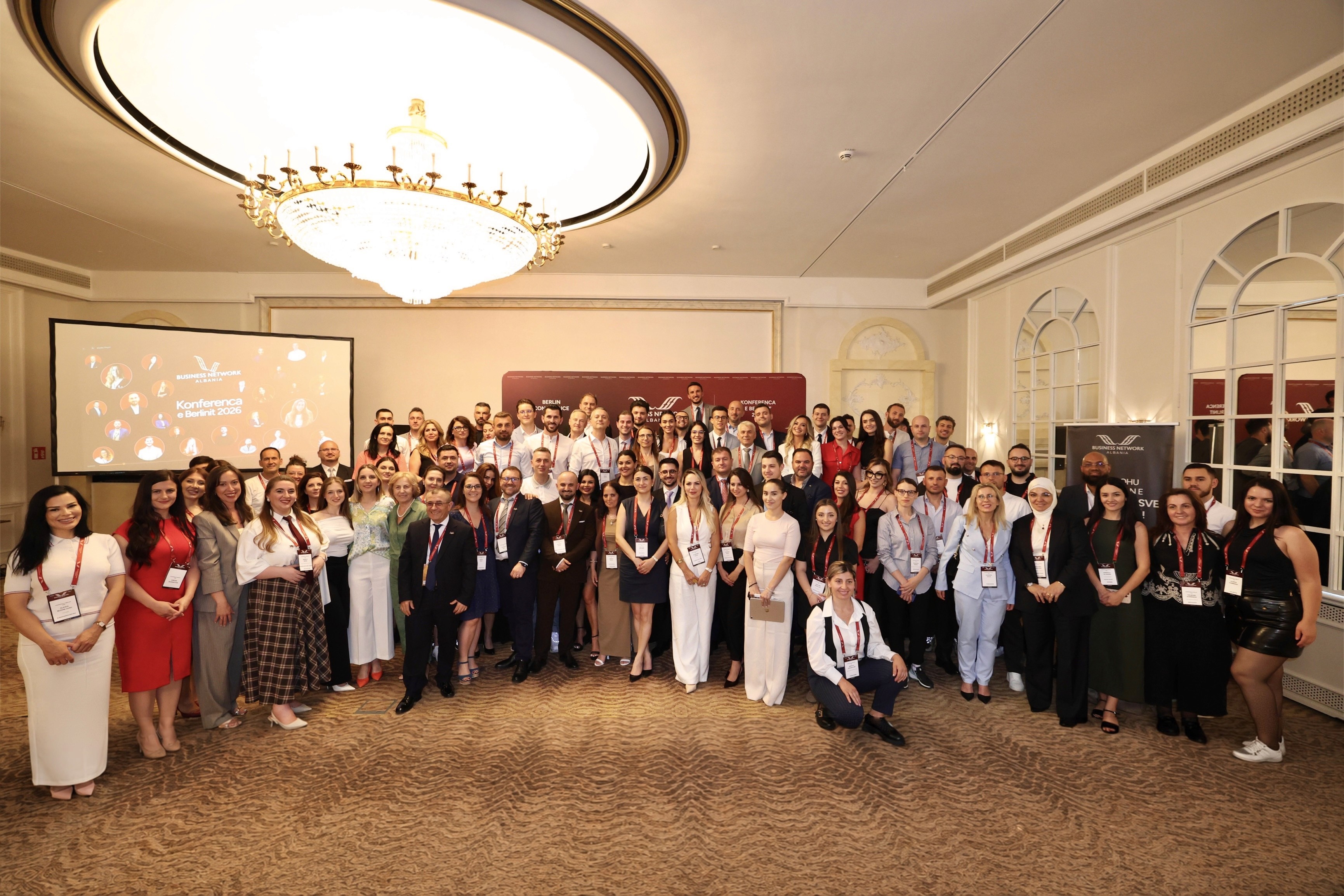
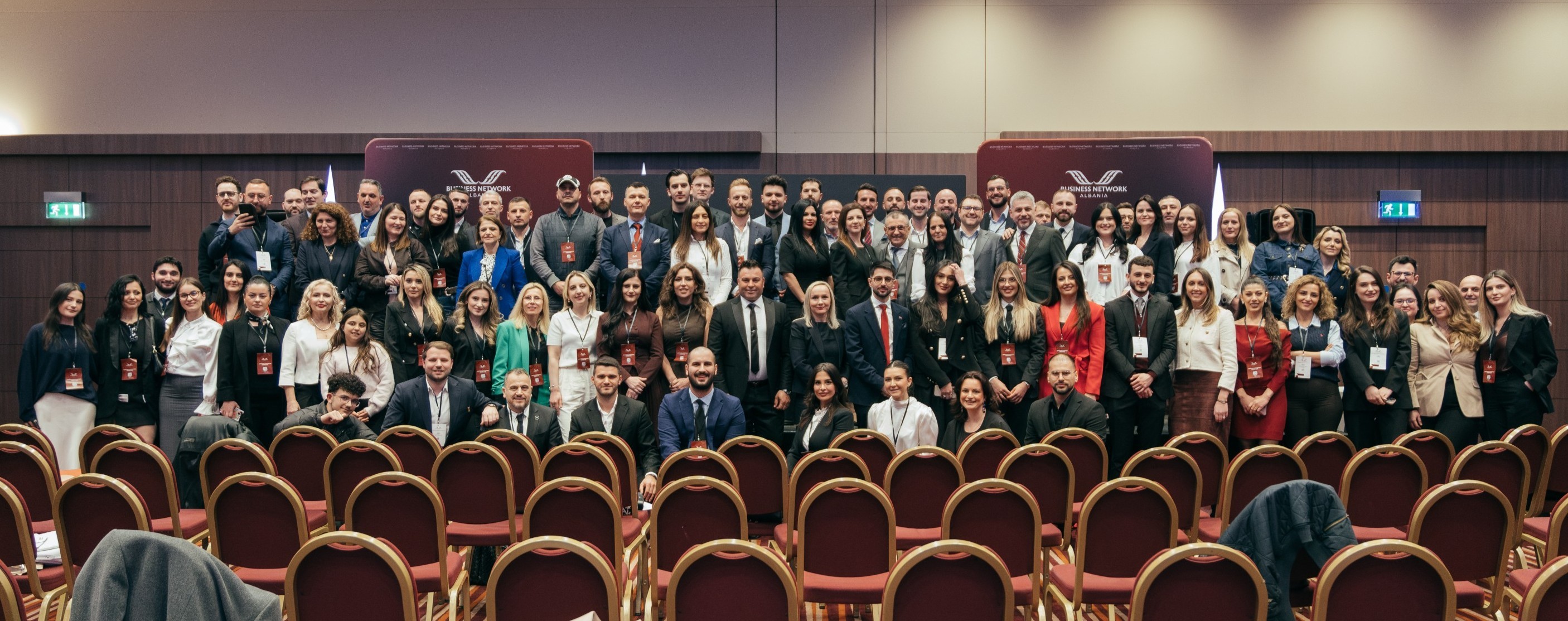
BNA marked another success with its conference in Berlin.
London Economic Conference 2026 - International Cooperation in the United Kingdom

Albanian Business Outlook 2025–2026: From Survival to Intelligent Growth
Ready to join our ecosystem?
More than 215 Albanian members around the world have chosen to be part of BNA.
Join BNA